A story almost no one learns. A story that survived precisely because Rome could not touch it. Arabia - where older Jewish-Christian and Syriac forms of the faith endured long enough to shape the religious world Islam emerged into.
Season 1 · Episode 12
This special episode steps outside the empire and into Arabia, where Christianity developed beyond the reach of Roman councils, canon, and episcopal control. It argues that Jewish-Christian, Torah-observant, Syriac, and Ethiopian forms of the faith continued to live on in caravan towns, tribal sanctuaries, border kingdoms, and oasis communities, and that these surviving Christianities help explain why the Qur’an’s Jesus, Mary, Abraham, and the prophets look so different from later Nicene Christianity.
This bonus episode turns away from the Roman world and asks what happened beyond the reach of the imperial filter. Season 1 traced the narrowing of Christianity inside the empire, but Arabia lay outside that funnel. In the Hejaz, the Red Sea basin, and the caravan routes linking Syria, Africa, Mesopotamia, and the Gulf, older Christian forms survived precisely because Rome could not reach them. Arabia was not a blank religious landscape awaiting Islam, but a crossroads already filled with Jews, Christians, pagans, traders, monks, storytellers, and seekers of monotheism.
Among the Christianities present in Arabia were forms closer to early Jewish-Christian memory than to the doctrinal Christianity later stabilized by councils. These included communities that honored Jesus as messiah and prophet without calling him God, retained continuity with Abraham and the Law, and remained Semitic in language and imagination rather than Greek and imperial in structure. Arabia mattered because it offered what displaced and marginal Christian groups needed: distance from Roman authority, linguistic kinship with Hebrew and Aramaic worlds, and the protection of geography.
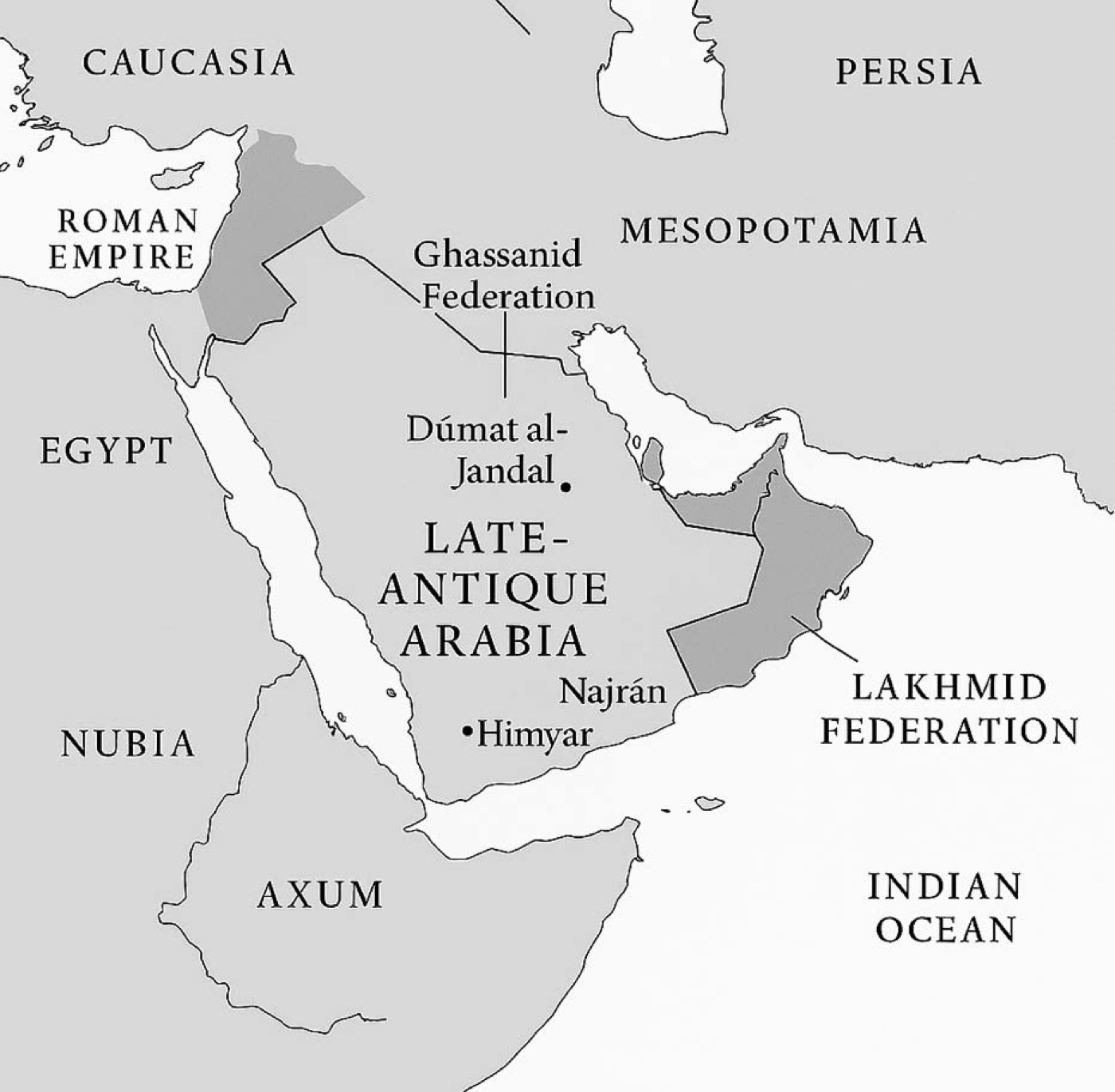
The episode maps the Arabian religious field: Najrān as the strongest Christian center in Arabia, with its Syriac links and martyr traditions; the Ghassanid and Lakhmid Arab federations as carriers of eastern, non-Roman Christian identities along the imperial frontiers; the Jewish tribes of Yathrib and Khaybar as custodians of scriptural memory; and the ḥanīfs as monotheist seekers dissatisfied with both paganism and the available religious forms around them. Arabia appears here as a living zone of overlap, not a frontier of ignorance.
Syriac Christianity carried a Semitic voice, rich in poetry, prophecy, strict monotheism, and stories about Jesus and Mary not preserved in the canonical New Testament. Ethiopian Christianity, moving across the Red Sea, brought a wider canon, strong Old Testament habits, visionary traditions, and a liturgical world that resonated with Arabian forms of religious life. These were the Christianities Arabia actually encountered. They were not Nicene in the later imperial sense, and that helps explain why the Qur’an’s account of Jesus does not fit the theology of councils.
Islam arose not against a single orthodox Christianity, but inside a religious environment already shaped by unfiltered Christian and Jewish traditions. The Qur’an’s Jesus is prophet and messiah, but not God incarnate. Abraham stands at the center as the primordial monotheist. The prophetic stories resemble the oral, midrashic, and Syriac worlds of Arabia more than the fixed theological system of Rome or Constantinople. Arabia is therefore the off-axis conclusion to Season 1: proof that early Christianity was once many things, and that what survived inside the empire was not the only possible future.
Key themesArabia beyond the Roman filter; Jewish-Christian survival outside empire; Syriac and Ethiopian influence on Arabian Christianity; Najrān and the martyr traditions; Ghassanids and Lakhmids as carriers of eastern Christian forms; Jewish tribes and prophetic memory in Yathrib and Khaybar; the ḥanīfs and Abrahamic monotheism; the Qur’an as echo of Christianities Rome did not preserve.