Not mystical like Syria. Not philosophical like Alexandria. Not visionary like Egypt. In Carthage, under Roman law, Christianity became forensic - a religion of boundary lines, courtroom clarity, and martyrs who refused to bow.
Season 1 · Episode 9
This episode follows Christianity into Roman North Africa, especially Carthage, where the movement took on a new form. It examines martyrdom as legal theater, the witness of Perpetua and Felicitas, the severe moral world of Tertullian, and the institutional vision of Cyprian. Africa matters because it taught Christianity how to define boundaries, defend conscience, and think about the Church as a disciplined body under pressure.
When Christianity crossed into Roman Africa, it did not become mystical like Syria, philosophical like Alexandria, or fluid like the communities of Asia Minor. In the Latin-speaking cities of North Africa, especially Carthage, it became sharper, more public, and more disciplined. This was a world trained by Roman law, civic scrutiny, and the demand to defend public identity under official eyes. In that setting, Christianity became forensic: a religion of moral boundary lines, legal confrontation, and visible seriousness.
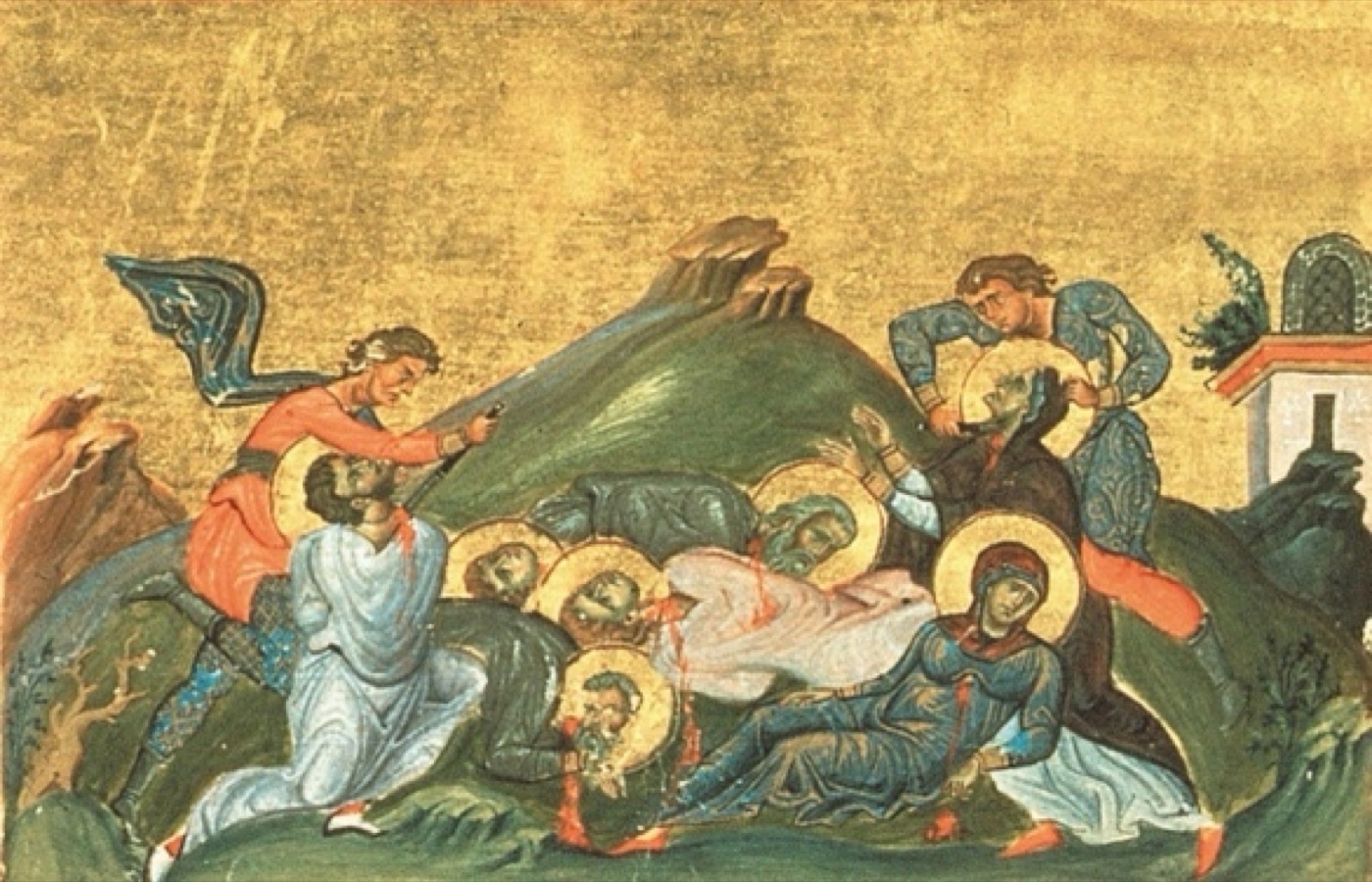
Martyrdom in Africa took on a distinctive form. Here martyrdom was not only prophetic witness or symbolic suffering. It became a legal performance, a collision between the Roman state’s claim to obedience and the Christian conscience’s claim to a higher law. The central example is the Passion of Perpetua and Felicitas, where a noblewoman and her enslaved companion refuse to yield before imperial power. Perpetua’s prison diary and Felicitas’s labor in confinement turn martyrdom into testimony: not merely death for belief, but a public argument about where true obedience belongs.
Tertullian was the great legal mind of African Christianity. Trained in rhetoric and Roman law, he brought courtroom precision into Christian thought. He treated Christianity as a disciplined way of life that required hard boundaries: no blurred line between Church and world, no compromise with idolatry, spectacle, or civic religion. His language is prosecutorial rather than conciliatory. For Tertullian, the Church had to remain visibly distinct, morally serious, and publicly defensible.
Cyprian of Carthage deepened the African contribution from moral rigor into ecclesial structure. The Decian persecution created a crisis over the lapsed, Christians who had sacrificed, bribed, or failed under pressure and later sought readmission. Cyprian had to decide whether the Church was a society of the pure or a body capable of reconciliation. His answer was decisive: the Church was a single living communion, and the bishop stood at the center of its power to heal, restore, and preserve unity. In Cyprian, African Christianity develops one of its most enduring ideas - that the Church is not merely a collection of convinced individuals, but an organized body whose cohesion matters as much as its ideals.
That is why Africa becomes so important in the wider story. It forges two impulses that later Christianity never escapes: uncompromising conscience and disciplined institutional unity. Tertullian sharpens the line between Church and world. Cyprian builds the first durable architecture for managing fracture, repentance, and ecclesial authority.
Key themesRoman Africa as a Latin, urban, legal world; martyrdom as public moral theater; Perpetua and Felicitas; Tertullian and Christianity as disciplined boundary; Cyprian, the lapsed, and the bishop as guardian of unity; the emergence of ecclesial structure under pressure; Africa as the source of Christianity’s legal and institutional seriousness.