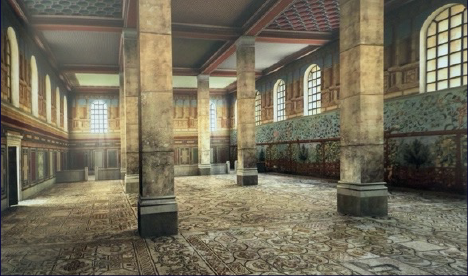
The story does not begin with a doctrine, a council, or even a book. It begins with a crack in the floor.
Season 1 · Episode 1
This episode opens the entire project through the dissonance of a single place: the ancient basilica of Aquileia, where the mosaic underfoot did not match the later story told about it. From that moment, the episode widens into three realizations - Nag Hammadi, Paul against Acts, and the fractured landscape of first-century Judaism - before turning to the imperial bottleneck that narrowed a plural Christianity into a single dominant form.
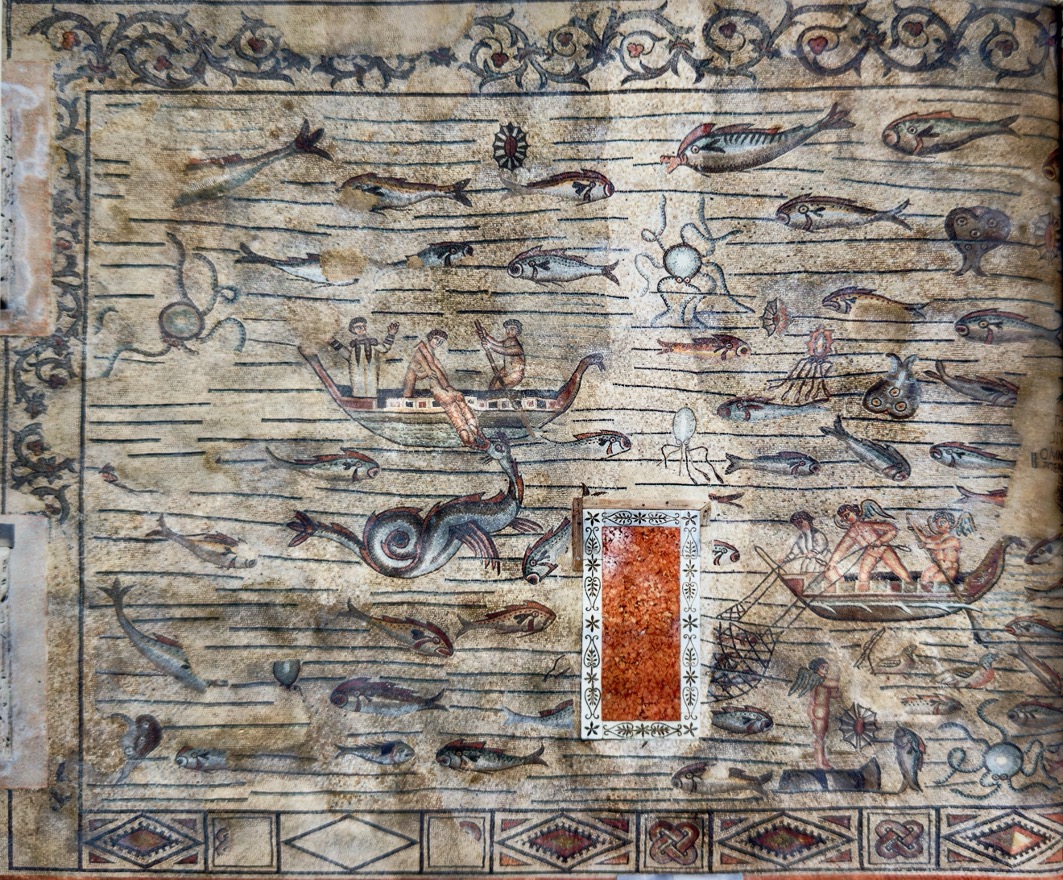
The project begins in Aquileia, in northern Italy. Standing above an early Christian mosaic, the narrator realizes that the image below does not proclaim the later world of bishops, altars, martyrdom, and imperial orthodoxy. It shows symbolic storytelling, communal memory, and ritual movement, but not the fully formed proto-Catholic structure later readers tried to see in it. That dissonance, between what the floor showed and what tradition insisted it meant, becomes the first crack in the official story.
From there, the episode traces three earlier realizations that made that crack intelligible. The Nag Hammadi discovery revealed Christian writings that belonged to a parallel world, preserving other memories of Jesus and other ways of organizing Christian life. Paul’s letters, set beside Acts, exposed the distance between lived conflict and later harmonizing memory. The study of Judaism before Christianity showed that the first century was not a stable, unified world, but a patchwork of competing groups, interpretations, and hopes, made even more unstable by the destruction of the Temple in 70 CE. Together, these pressures show that Christianity did not begin as one thing. It began as many things.
The episode then shifts from religious diversity to political selection. In the crisis of the third and fourth centuries, Christianity offered the empire something the old civic religion could no longer provide: monotheism, discipline, hierarchy, and a structure that could bind communities across regions. Legalization in 313 did not create orthodoxy, but it created the environment in which one version of Christianity could begin to dominate. Nicaea and the later imperial settlement under Theodosius did not simply clarify doctrine; they narrowed the field, outlawed rivals, and forced the religion through an historical bottleneck. What survived did so because it aligned with imperial power; what did not survive was erased, condemned, or destroyed.
The argument is simple but decisive: Christianity was once a forest, not a single tree, and the history that survived is the history of the winners.
Key themesAquileia and the problem of inherited interpretation; Nag Hammadi and the evidence of parallel Christianities; Paul against Acts as the conflict between history and memory; first-century Judaism as a fractured landscape rather than a straight line; Constantine, Nicaea, and Theodosius as the political narrowing of the field; the filter, the bottleneck, and the rewriting of Christian origins.