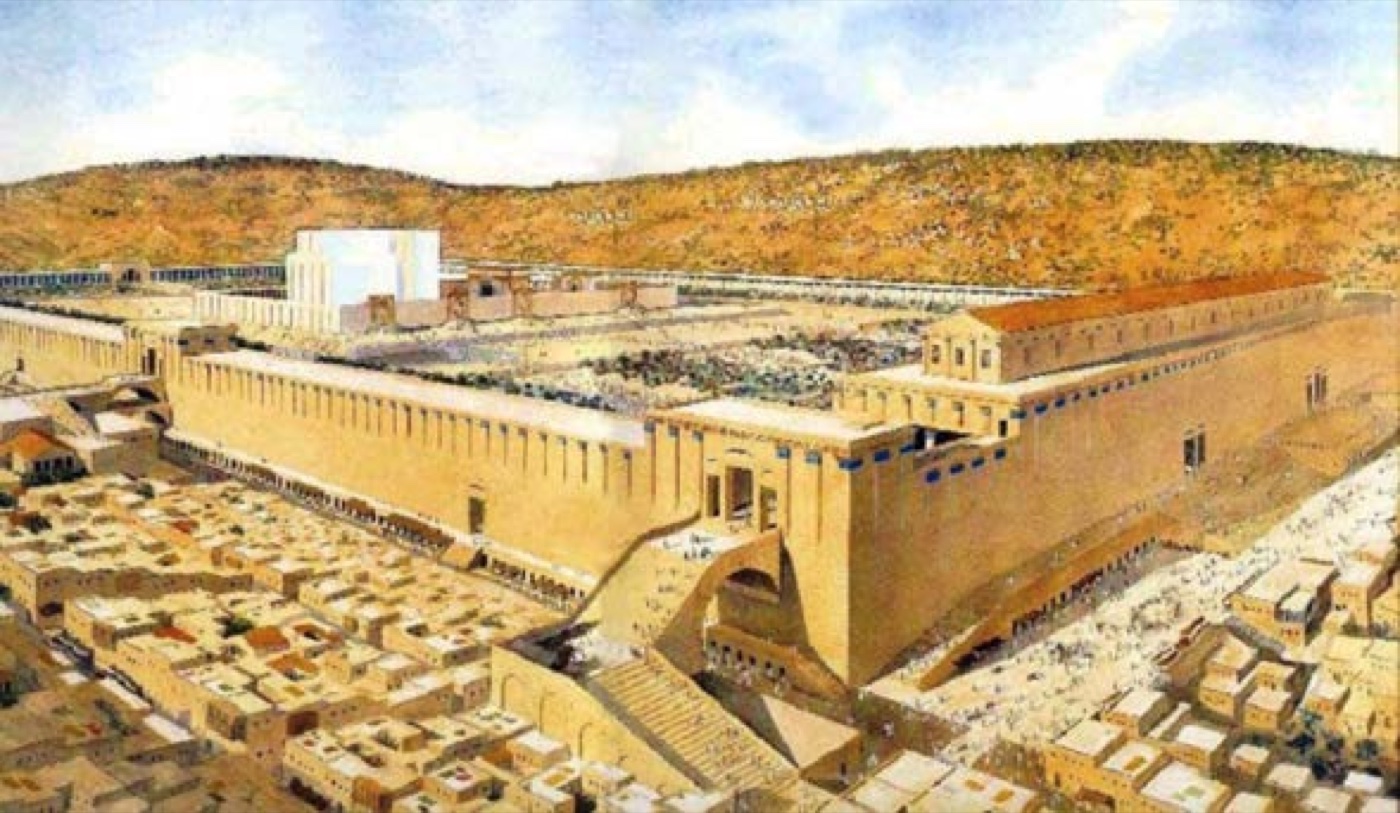
Before the gospels, before the Jesus movement, before anyone spoke of Christians or churches, the ancient world was rushing toward something no one could name. Judea was a pressure cooker. Hope was not comfort. It was fuel.
Season 1 · Episode 2
This episode reconstructs the world Christianity entered before it existed. It begins in Judea, where Temple worship, scriptural interpretation, Roman occupation, and messianic expectation created a pressure-filled environment. It then widens to the larger Mediterranean world of gods, mystery cults, philosophy, astrology, and the search for salvation, before bringing those tensions back together in Jerusalem, where Jewish memory, Roman power, and spiritual expectation converged.
This episode begins before Christianity. It opens inside the Jewish world of the late Second Temple period, where the Temple still stood as the center of worship, sacrifice, identity, and divine promise, but where that promise had begun to feel fragile. Judea lived under Roman power, after exile, disappointment, and the loss of political independence. Jewish monotheism itself is presented as historically recent and institutionally enforced, not timeless and uncontested. By the first century, Judaism had become a landscape of competing interpretations: Pharisees, Sadducees, Essenes, apocalyptic groups, and revolutionary hopes, all reading the same inherited texts in different ways. Scripture had become not only memory, but argument. In that world, hope was not comfort. It was pressure.
The episode then widens beyond Judea. The larger Greco-Roman world was already full of rival answers to the same human questions Christianity would later address. Ancient religion still functioned through participation, sacrifice, and correct ritual, but many people were searching for something more coherent and more personal. Philosophy offered moral and metaphysical order. Mystery cults offered transformation, initiation, and salvation as experience. Astrology deepened the sense that human lives were trapped within fate. Thinkers like Philo of Alexandria show that concepts such as Logos, spirit, light, and allegorical interpretation were already in circulation before Christianity made them central to its own language. Christianity did not enter an empty religious field. It entered an overcrowded one.
The final movement brings these pressures back to Jerusalem. By the first century, the city stood at the point where Jewish covenant memory, Roman military control, Greek intellectual influence, and apocalyptic longing collided. The Temple still marked the place where heaven met earth, but the city lived under fear, surveillance, and political volatility. Passover reenacted liberation while Roman troops watched for revolt. The silence of prophecy intensified the hunger for a new voice. In that environment, any teacher, healer, or preacher who seemed to speak with unusual authority entered a world already listening for an answer. Christianity did not create that longing. It emerged from it.
Key themesThe Temple as the center of Jewish life; Judaism as competing interpretation rather than a single unified system; Roman occupation and crucifixion as political atmosphere; the plurality of ancient religious life; philosophy and mystery cults as rival responses to suffering and salvation; astrology and fate; Jerusalem as the place where these pressures converged.